Less scrubbing and less effort with enzymes
Consumers expect tableware and cookware to be spotless after washing, but they don’t like to scrub. Turn this challenge into a brilliant business opportunity with enzymes.
Zero-tolerance for
dishwash failure
31% of consumers feel disgusted by tableware that’s not completely clean. Consumers expect dishes, cutlery, pots and pans to be clean after washing and have zero tolerance for food residues. In a recent Conjointly survey of more than 1,000 consumers, 31% said they felt disgusted by washed tableware that wasn’t completely clean. Nearly half said it made them feel dissatisfied.
Rethink hand dishwash
New consumer insights and innovative formulations present a strong business opportunity for changing the hand dishwash market

Dishwashing insights and trends
Consumers want less scrubbing
Doing the dishes is a common source of conflict in many households. A report from the Council of Contemporary Families (CCF) in the US found that dishwashing causes more relationship stress than any other household chore—and scrubbing plays a big role in this. In our 2017 study of over 1,000 US consumers, 51% said they found scrubbing annoying. Similarly, a Userneeds study of 1,500 European consumers revealed that reducing scrubbing was their top priority when choosing a washing-up liquid.
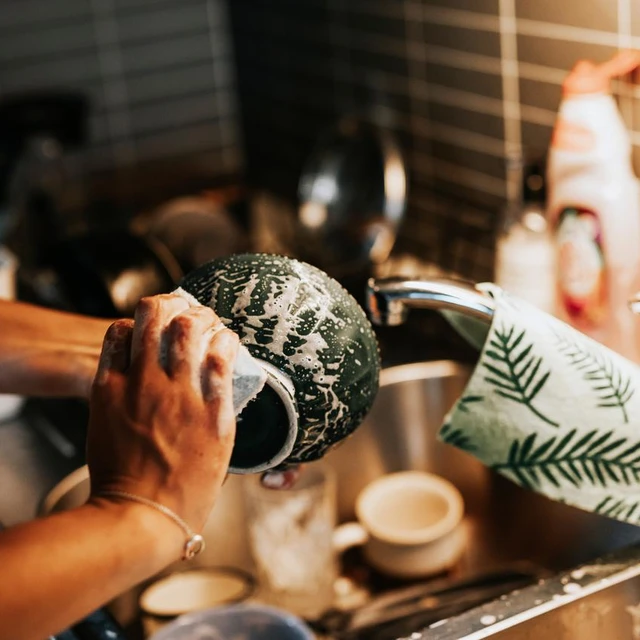
Soaking heavily soiled cookware is standard
Studies confirm that soaking is a widespread behavior among consumers—even for those who say they don’t soak. For heavily soiled items like lasagna dishes, soaking is a natural step that helps loosen stubborn residues.
In the Userneeds study, 83% of consumers said they soak dishware or cookware, while the DishGo Study by weseethrough, which used video analytics, showed that soaking is standard practice across households.
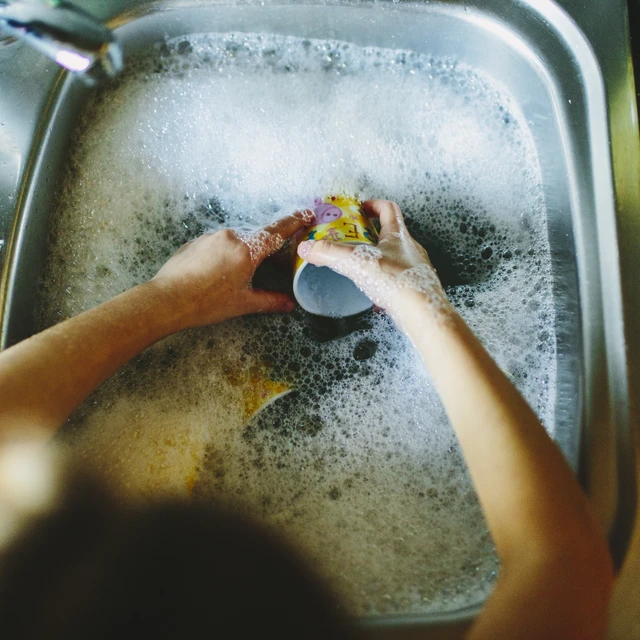
Contact time is part of hand dishwashing process
Enzymes need time to work, and longer contact times—like those achieved during soaking—lead to better results. While many believe there’s no soaking involved in hand dishwashing, the reality is that everyday washing-up routines often involve contact times of up to two minutes. This is enough for enzymes to tackle lighter soils on dishware and glassware effectively.
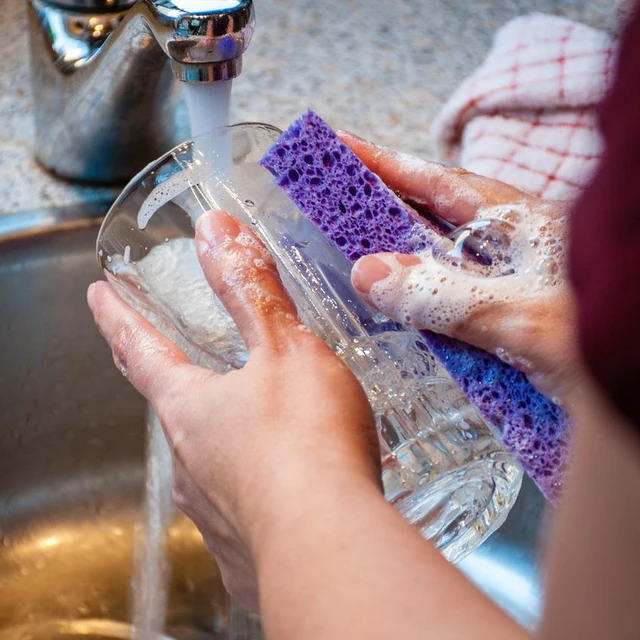
Consumers choose mild
The DishGo Study also revealed that consumers increasingly prefer eco-friendly detergents that are gentle on their skin. Concerns about chemical residues on dishes are common, with one participant from the UK saying they use extra water to "wash off all the bubbles… especially (from) my daughters’ stuff." While consumers prioritize sustainability, few are willing to compromise on performance. As one participant put it: "Since you eat from the stuff you wash, the ideal detergent should be as ecological as possible, but still doing its job."
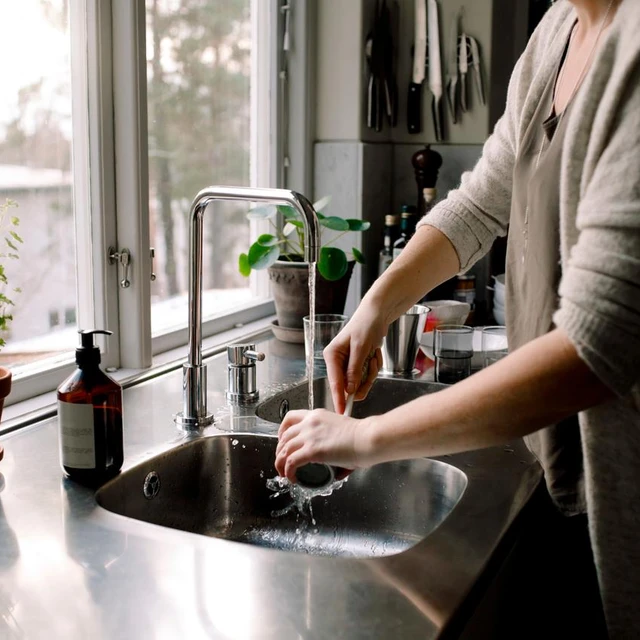
How to do the dishes with less effort
performance improvement on stubborn stains enabled by biodegradable, renewable enzymes.
A 15- minute soak with an enzymatic dish liquid is 3 times more effective than the same soak with a non-enzymatic one.
24 scrubs with an enzymatic hand dishwash detergent are 4 times more effective than 32 scrubs with a non-enzymatic one.
Psst! Want a more powerful, profitable product?
Spray detergents with lipase remove up to 367% more greasy soil and command up to a 186% higher price than traditional hand dishwash liquids.
Ideate with us
Take part in one of our ideation workshops:
- Discover market trends, and how to match products to them
- Develop product claims based on consumer research
- Increase products' speed to market
One more step…
To complete the get in touch form or sign up, please click on the button below to enable cookies.