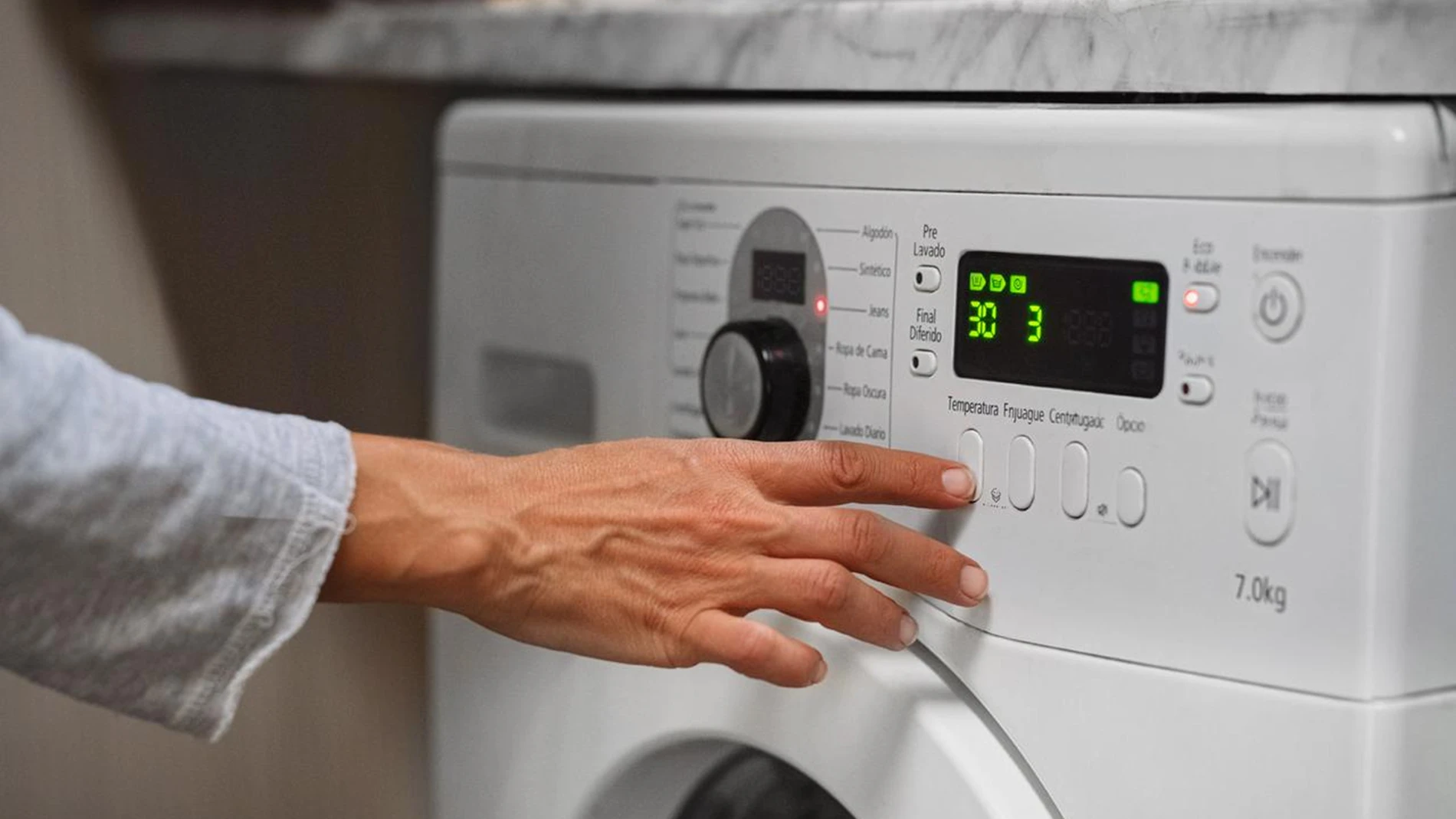
The hot topic of cold wash
Lower laundry temperatures help consumers save money. Together we can help them turn the dial down.
Higher temps equal higher costs
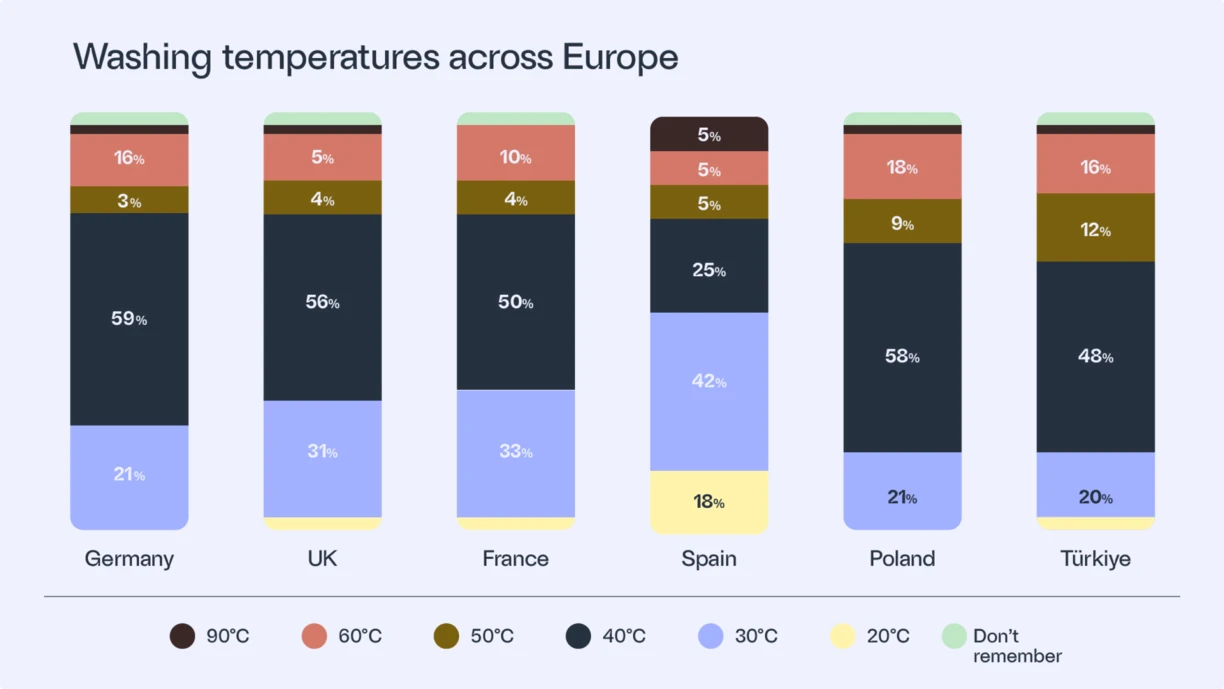
Nearly two-thirds (63%) of Europeans mainly wash at temperatures above 30°C.
Washing at high temperatures has always been costly. Consumers are now more aware of how temperatures affect costs and are open to change. With the average household doing 3.2 loads weekly, lowering wash temperatures from 40°C to 30°C could save the region nearly 1.6 billion Euros annually, based on 2021 electricity prices. Dropping to 20°C could save even more, offering consumers meaningful savings while reducing energy use.
Low-temp washing. Why the pushback?
Nearly half of 12,000 European consumers in a 2021 study avoided lower wash temperatures, doubting their detergent's performance. Of those, 39% worried about stain removal, and 21% washed warm or hot out of habit. Confidence in cold washing can lead to savings and better habits.
As part of defining what “clean” means, our own research shows that 40% of European consumers frequently experience reoccurring malodor from sweat and body grime as a recurring laundry challenge. And, about 50% report that even though their clothes look clean, they still smell – a challenge some consumers try to fight with higher wash temperatures.
Enzymes perform at any wash temperature
Most stains (including foods, body grime, and sebum) become harder to clean at cold temperatures, and many detergents today aren’t optimized towards these tough conditions. Consumers are therefore left with residual dirt and odors, or they’re forced to rewash items to achieve a complete clean.
A winning detergent must be able to consistently perform across temperatures, including in cold wash, to meet consumer expectations. As P&G pointed out recently in POLITICO Europe, enzymes are a key enabler of low-temperature wash performance.
Since many common stains in Europe are enzyme sensitive, enzymes can close the performance gap that otherwise occurs when consumers decrease wash temperatures. In fact, the right enzymes can even increase detergent performance at lower temperatures compared to higher wash temperatures with a non-enzymatic detergent.
Fig 1: Enzymes boost cleaning performance at 20°C
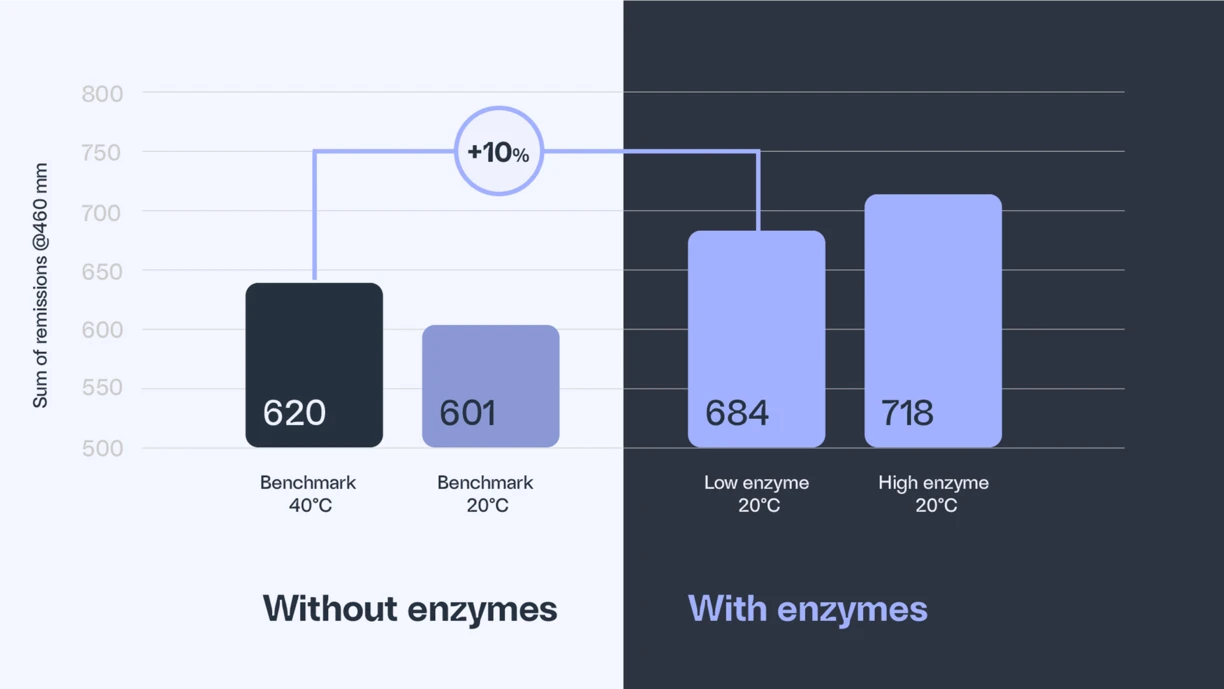
Fig. 1 shows how lowering temperatures has an impact on the stain removal power of a detergent. This drop in temperature can be “closed” by adding enzymes to a detergent. This means that the detergent performs as well at 20°C with enzymes as it does at 40°C without enzymes.
Enzymes can also enable a deep, hygienic clean. Novonesis’ Pristine®, for example, provides a hygienic deep clean, removing the body grime that traps malodor throughout the temperature spectrum.
Fig 2: Deep cleaning in cold wash
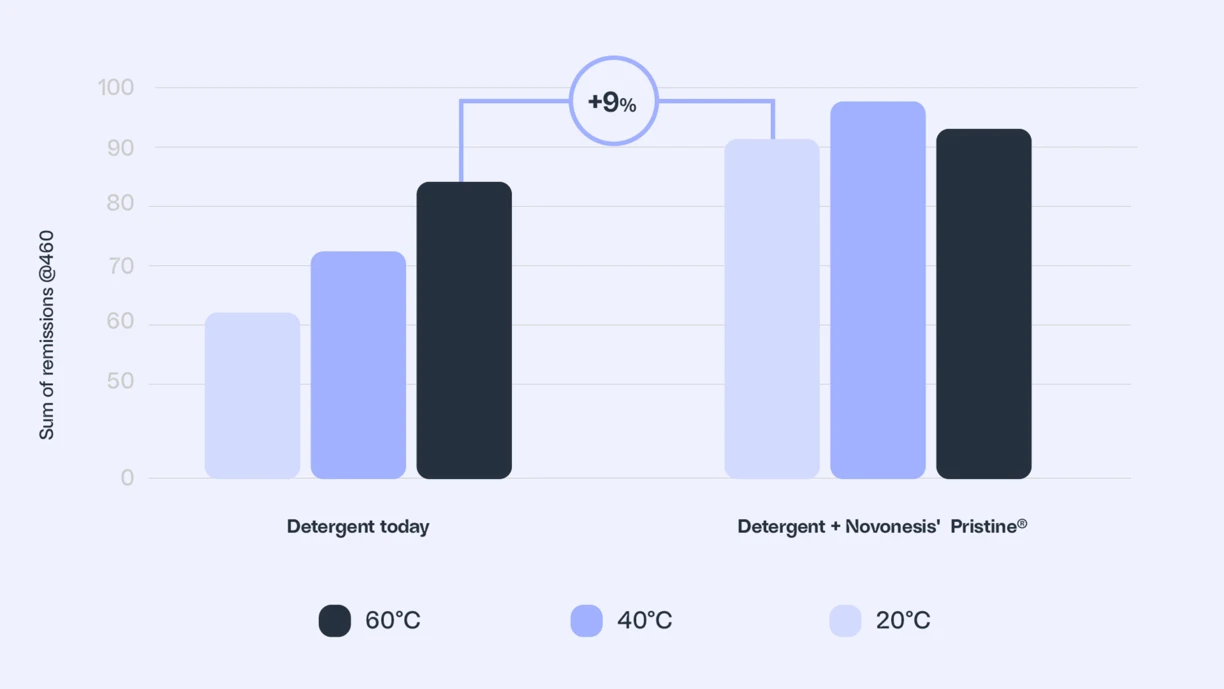
Fig. 2 shows the impact of removing extracellular DNA (a key sticky component of body grime) across temperatures in a European detergent, both with and without Pristine®. At cold temperatures, even down to 20°C, the detergent with Pristine® outperforms the current detergent and can even beat the performance of the detergent alone at high temperatures.
Get more green fabric claims too
Lowering wash temperatures benefits consumers financially and also makes washing clothes more sustainable. Europeans can decrease CO2 emissions by more than 2.7 million metric tons evert year just by reducing wash temperatures from 40°C to 30°C (Source). In fact, 60% of Europe’s laundry carbon footprint is mainly due to heating washing water (Source).
Consumers should also know that lowering wash temperatures:
- Reduces color fading
- Preserves sportswear functionality with special technical features
- Increases fabric longevity
- Reduces microplastic shedding levels
Leverage your low-temp opportunities
We can help you tailor your formulation to ensure performance at low temperatures. We’ll support you with the educational materials and proof you need to win consumers over, too. The right formulation can even potentially reduce your costs while maintaining or increasing performance.
Ready to power-up with biosolutions?
Interested to see what biosolutions can do for your business? Fill out the form and one of our Laundry experts will be in touch shortly.
One more step…
To complete the get in touch form or sign up, please click on the button below to enable cookies.