


What will solve the endoscope challenge?
Study shows multi-enzymatic detergents deliver enhanced, targeted cleaning power to endoscope organic films
Multi-enzymatic detergents are premium performers
Healthcare-acquired infections (HAIs) have a significant impact on patients and hospitals, making effective surgical instrument cleaning critical. A July 2021 study by Montana State University* evaluated a medical detergent with and without enzymes to assess their ability to remove organic films from endoscopes. Results showed multi-enzymatic detergents are highly effective, though further research is needed to confirm findings.
The burden of HAIs on health care
The CDC estimates the annual costs of HAIs to hospitals are $28bn-$45bn and 72,000 lives and cause longer hospital stays, long-term disability and increased costs.
$28-45bn
estimated overall annual direct financial costs of HAIs to hospitals in the US
Clinical soils – a complex cleaning challenge
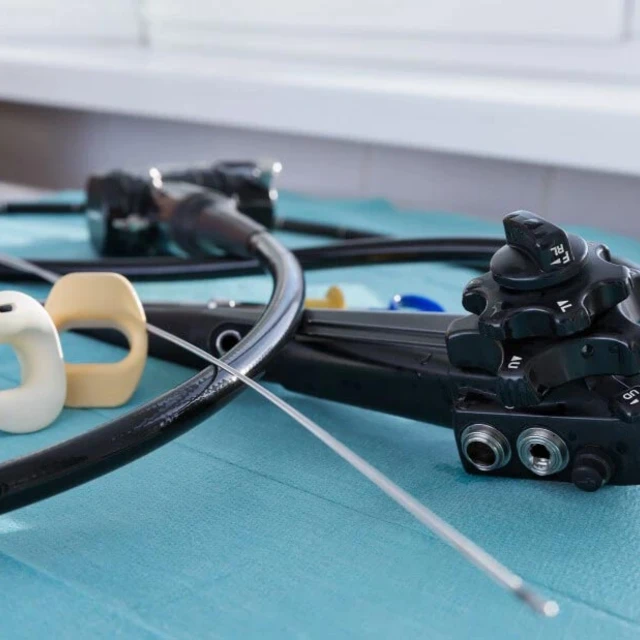
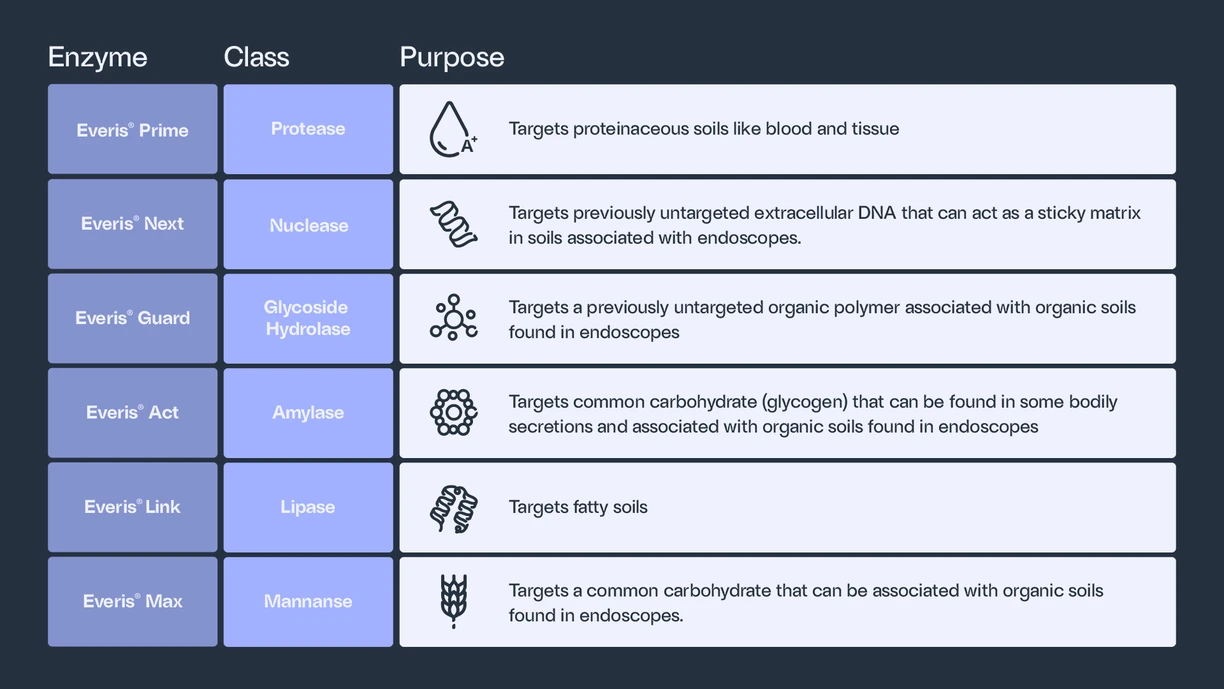
Soils are often embedded on surfaces that are difficult to access, such as into hinges, joints, lumens and other hard-to-reach parts of reusable medical devices. In addition to their location, each soil has a unique composition making it challenging to find a detergent that can break down the diverse types of organic soils. This is why many Sterile Processing Departments turn to enzymatic detergents. They’re designed to specifically target common clinical soils. For example, proteases work on proteins, like blood and muscle tissues; cellulases, amylases and mannanases break down common carbohydrates, while lipases target fatty soils like adipose tissue.
In recent years, the use of multi-enzyme detergents has grown as hospitals experience better results on more complex soils. New innovative enzymes such as Novonesis’ Everis® Next and Everis® Guard focus on extracellular DNA and a previously untargeted organic polymer respectively. Enzymatic detergents can take another leap forward by actively targeting endoscope soils. Both enzymes are compatible with other enzymes and were included in the study.
Replicating real-life conditions
The study replicated endoscope cleaning challenges by testing different detergents’ ability to clean organic soils left by two pathogens that can cause HAIs - Klebsiella pneumoniae and Pseudomonas aeruginosa. Both organisms are common isolates found in dirty medical instruments. By using real soils, the experiments came closer to real-life conditions faced by hospital sterile processing departments.
The detergent base chosen was a premium North American medical detergent with heavy surfactant load. The detergents were diluted to 0.78% prior to use. Treatments incubated for 20 minutes at 45°C under static conditions. As the mechanical action of the washing process is an important part of the actual cleaning process, it would be fair to assume better results in real-life conditions.
It is proven that enzymatic detergents can enhance cleaning and patient safety in multiple healthcare applications. This includes everything from manual soaking to automatic washing in a hospital’s sterile processing department.
Method of analysis
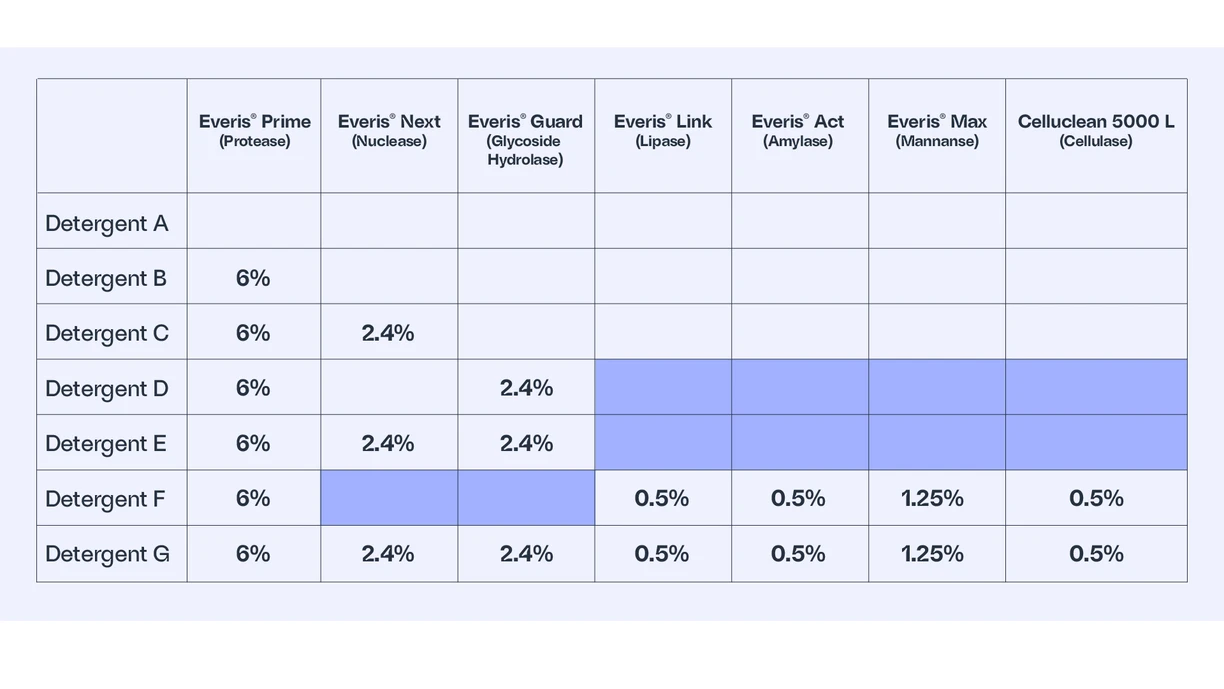
Fluorescent staining techniques in combination with confocal microscopy were used to measure the reduction of DNA and carbohydrate soil on a Teflon surface, following treatment with different detergents. Each experiment was run three times on each of the organisms in tubing segments using a detergent with six different combinations of enzymes, as well as the same detergent without enzymes.
In addition to fluorescent staining, direct microbial counts (performed after a disinfecting treatment) were carried out on residual waste flushed from the tubing after treatment and on the residue remaining in the tubing using epifluorescent microscopy. The objective of the direct count method was to determine if the chemically-killed cells, replicating a device that had been previously disinfected, were easily cleaned from the surface due to enzymatic reduction of sticky-glue like organic residues or if they remained adhered to the inside surface of the tubing.
Findings
The average percent fluorescence reduction was calculated for the three experimental runs per species. When compared to the detergent without enzymes detergents C, E and G, all of which contained Everis® Next, demonstrated the greatest average percent reductions in the DNA soil.
With respect to the carbohydrate soil, the same three detergents were again top performers against the residual soil left by one of the strains but not the other. Results demonstrate that combining Everis® Prime, Everis® Next, Everis® Guard and other classes of enzymes can improve cleaning. Interestingly, the detergent with only a protease and the detergent with all of the enzymes except Everis® Next and Everis® Guard did not perform as well when compared to the detergent control.
Representative combined color images (figure 1) from the confocal microscopy show visual comparisons between the untreated control and the detergent only control to the enzymatic detergents C, E and G. Both controls show a stronger green fluorescence signal indicating the presence of more extracellular DNA and DNA found within non-viable cells. On the other hand, a reduced signal of green fluorescence attributed in part to the enzymatic degradation of DNA by Everis® Next is observed in those samples treated with enzymatic detergents. While there is some red fluorescence observed in the images indicating the presence of carbohydrates it is not as noticeable and less telling of the enzymatic effects.
Figure 1
Figure 1: Representative fluorescent images from confocal microscopy showing the reduction of DNA-based soil (green fluorescence) with various enzymatic treatments as compared to and untreated and detergent only control.
Control (a), detergent control (b), detergent C (c), detergent E (d) and detergent G (e)'
Additional combined color images (figure 2) further demonstrate the effects of Everis® Next as well as carbohydrases including Everis® Guard. The untreated control shows a high green fluorescence signal (representing DNA) and a few indications of red fluorescence (representing carbohydrates). And while the detergent only treatment is able to clean/reduce some of soil, when both controls are compared to enzymatic detergents C, D and E there is a stark difference in red and green fluorescence signals further indicating the cleaning effect of multi-enzymatic solutions.
Figure 2

Figure 2: Representative fluorescent images from confocal microscopy showing reduction of both DNA-based soil (green fluorescence) and carbohydrate soils (red fluorescence) with various enzymatic treatments compared to an untreated control and a detergent only control.
Control (a), detergent control (b), detergent C (c), detergent E (d) and detergent G (e)
Direct counts
While the direct count results were not as consistent with respect to the top performers as the fluorescence results, detergents E and G again demonstrated some of the best results. Treatment with these two detergents compared to the detergent only control showed more chemically-killed bacteria had been washed from the system leaving behind fewer chemically-killed bacteria in the tubing. Detergents D and F also performed well, and although Detergent C was not a top performer, it still performed better than the control detergent without enzymes. Once again, the detergent containing only a protease did not perform as well as the other enzymatics, further indicating that single enzyme solutions are not as effective as multi-enzymatic ones at cleaning complex organic soils. The results of the study demonstrated a reduction of some soils with enzymes, and positive trends in improving the ease of cleaning the teflon surface by loosening the glue-like properties of the organic residue. This was particularly clear in the experiments around sticky DNA soil where detergents C, E and G consistently stood out. All three detergents contain Everis® Next, which is a newly released enzymatic innovation designed for complex medical soils.
Commenting on the study, Novonesis Senior Scientist John Howell says, “Adjusting some of these parameters may have further improved outcomes. For example, the study focused on the enzyme and detergent content and did not look at the effects of the age of the organic film, mechanical action (e.g., flushing while cleaning), temperature, dosing or time.”
Endoscope cleaning requires broad-spectrum enzymatic detergents
Getting an endoscope clean enough for subsequent effective high-level disinfection requires a broad-spectrum- approach – with the right enzyme content. Today’s average medical detergents typically use 1- 1.5 enzymes. To advance cleaning, especially with endoscopes, we must use more than two enzymes from different classes. The study also indicates that the advanced enzymes tested, Novonesis Everis® Next and Everis® Guard, can deliver robust performance in combination with other enzymes.
In recent years, the composition of detergents has changed with greater dosing of enzymes and a wider range of enzymes. This has given many sterile processing departments the cleaning performance they need. Now this study establishes a good baseline and proof of concept for the use of multienzymes in tackling complex soils in medical cleaning. However, more studies are required to further understand the role of enzymes in cleaning.
If you are interested in hearing more about this study or partnering for future studies, contact us below.
*This information was provided under a Montana State University Testing Services Agreement and is not intended to endorse or recommend any product or service.
To improve cleaning, more than two enzymes from different classes provide superior performance.
Multi-enzyme provides superior performance
Novonesis’ Everis® removes organic soils for a clinical clean.
Interested in hearing more about our new technology and what it could mean for your business?
One more step…
To complete the get in touch form or sign up, please click on the button below to enable cookies.