Cost-efficient solutions for Biodiesel FAME producers
Embrace RED II with feedstock flexibility and enzymes
This article is based on a report jointly conducted by Novozymes A/S and Argus Media consulting in May 2021.
The green diesel market is no stranger to turmoil. Technical blending limits, cheap imports from outside the EU and Covid-related decreases in diesel demand have created a challenging environment for producers in the last few years.
With the introduction and subsequent revision of RED II, there is a clear transition towards more sustainable feedstocks. Separation from familiar crop-based feedstocks towards cooking oil and other waste-based feedstocks may provide the industry with its biggest challenge yet. FAME biodiesel producers may be particularly vulnerable to market trends and will need to adapt accordingly.
But are they all equally ready to cope with a new set of rules?
In a survey conducted by Novozymes* and Argus media in 2021, European FAME producers representing approximately 25% of operating FAME capacity indicated that many producers are largely unprepared for the challenges, but some are preparing for flexibility in feedstocks, production pathways and business models, which could position them well for the future.
*Novozymes is now Novonesis, as part of the merger with Chr Hansen holdings in 2024.
Positive outlook but not without its challenges
Over 90% of producers maintained a positive outlook for biodiesel FAME demand, with 2030 levels expected to be the same or higher than 2019 levels. And whilst support from marine, heating and other non-road transport sectors are seen to bolster the outlook, the road transport sector is thought to provide the largest additional demand volumes. For FAME producers, the main anticipated challenge will be feedstock related.
For FAME producers, the main anticipated challenge will be feedstock related.
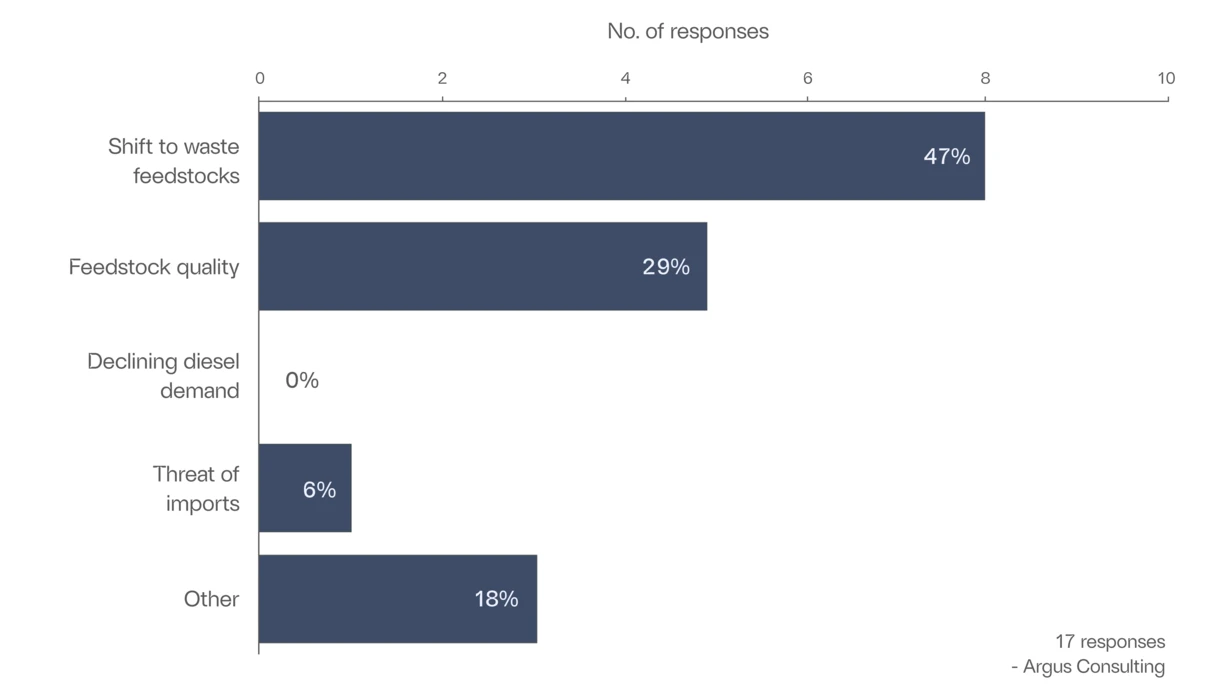
Question: What do you see as the greatest challenge facing FAME producers over the next 10 years?
Over half of survey participants cited a shift to waste feedstocks as the greatest challenge to 2030, whilst a further quarter raised the challenge of dealing with variable feedstock quality. Both are a clear indication that RED II, and its likely impact on national policies, is the key driver of change.
RED II certainly provides an EU-trajectory towards sustainable feedstocks, but differing national approaches and delayed updates to country-level policies, can provide a hurdle for FAME producers. Many look for long-term policy certainty before sanctioning large investments and wide-scale changes in their processing capabilities.
Feedstock flexibility is key
Over 70% of participants expect existing FAME production sites to increase feedstock flexibility to tackle the oncoming feedstock challenge.
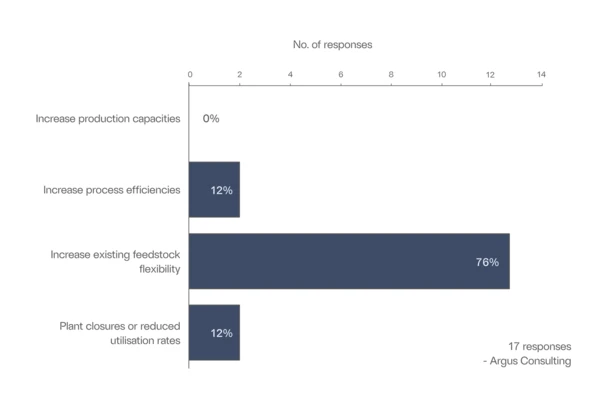
Question: What do you think will be the dominant trend for European biodiesel producers over the next 10 years (in light of RED II legislation)?
Primary feedstocks – largely used cooking oil (UCO) and rapeseed oil (RSO) – will remain. But over 75pc of surveyed producers anticipate production of some part A compliant fuels in addition.
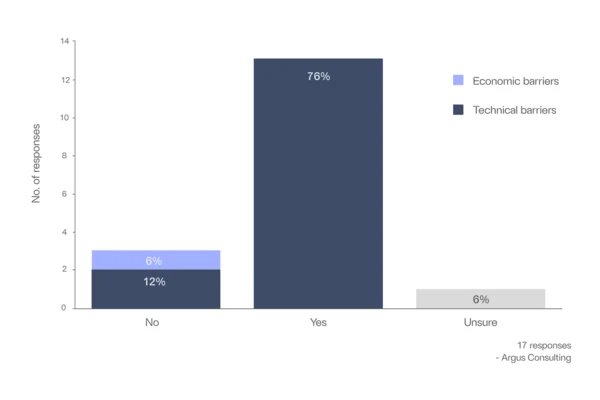
Question: Do you plan to produce part A compliant biodiesel?
POME and acid oils are just some of the part A feedstocks expected to be utilised, but there isn’t a clear consensus. Feedstock availability and costs are considered key restrictions for expanding feedstock ranges.
Beyond this, the high free fatty acid (FFA) content and variable feedstock quality of part A feedstocks pose technical challenges for producers. Many can only utilise limited volumes in their current process. Inability to process and processing costs hinder the diversification of their feedstock range. It’s unclear if operators realise their potential competitive disadvantage if their processes are insufficiently flexible.
Producers will need to embrace process changes and invest
Surprisingly contrary to the highlighted significance of the shift to waste feedstocks, nearly 60% of producers indicated they have no or limited ability to switch feedstocks with varying FFA content. Many of these require process shut downs to allow adjustments. This costs money and time in an industry that is running under capacity.
Future-proofing FAME
Historically, FAME producers invested to incorporate part B feedstocks. Now, they may need to invest again to allow additional flexibility for a broader list of feedstocks (including part A). This will be critical to remain competitive in light of changing policies.
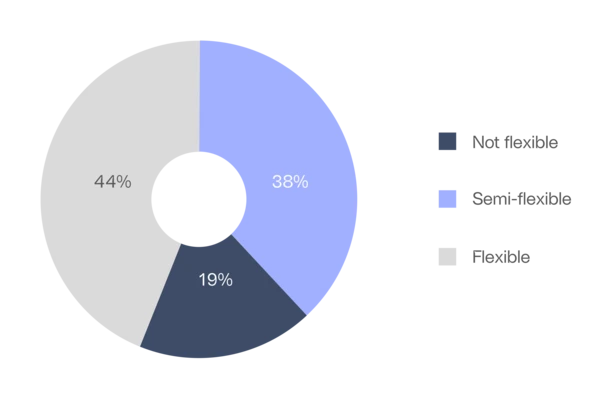
Question: How flexible is your current plant/s in utilising variable feedstocks without further CAPEX investment?
Note: flexible means the plant/s can simultaneously process multiple feedstocks of varying FFA content; semi-flexible means the plant can process multiple feedstock types with process shut-downs/restarts to switch.
Enzymatic catalysts provide a proven, cost efficient way to modify existing plants for feedstock flexibility
Novonesis's enzyme technology provides FAME producers with an alternative to rigid chemical technologies that are either suited for low FFA feedstocks (sodium methylate or potassium hydroxide catalysts) or high FFA feedstocks (sulphuric acid or MSA) – simultaneously enhancing product yield and glycerine by-product quality.
Enzymes enable the processing of feedstocks with any content of FFA and glycerides. Shifting from high FFA feedstocks to high glyceride feedstocks and vice versa can be done without modifications and shutting down the plant. This enables producers to flex feedstock options based on availability and cost, not on process requirements. Enzymes also have easier handling requirements and require benign processing conditions, removing the need for expensive metal reactors and saving time and money in retrofitting plants.
Novonesis has supported more than 100 plants worldwide since 2014, with capacities ranging from 10,000 to 150,000 tonnes a year.
Oleofat, a company in Spain, has produced FAME biodiesel from byproducts and waste oils (including degraded oils, tank bottoms, oil sludge, oleins and fatty acids) using Novozymes technology since 2019.
“Our biggest challenge was to handle the high FFA of our feedstocks… Working with Novozymes we are now able to provide our customers with high-quality and sustainable raw materials” – Rafael Lavin, CEO, Oleofat
Stay competitive - embrace change and modernise business models with enzymatic technology
The role of feedstock flexibility in meeting RED II mandates is becoming increasingly clear. Enzymatic technology allows producers to make their feedstock decisions based on availability and costs, rather than be constrained by processing ability. This will lead to an inevitable divide in the European FAME biodiesel market, between those producers reluctant to diverge from outdated chemical catalyst processes, and those who choose to respond to RED II with enhanced feedstock flexibility, and remain competitive in these rapidly changing markets.
What could this mean for your business?
Fill in the form below and we’ll be in touch.
One more step…
To complete the get in touch form or sign up, please click on the button below to enable cookies.